The market thesis
The U.S. Hispanic consumer is reshaping spirits and beer. Most brands are still talking to them in translation.
This page is the case file: $2.4 trillion in buying power (NielsenIQ, 2024), a consumer who out-spends the general market per spirits occasion, and a beer that rode cultural authenticity to #1 in America. Every number below carries its source and year — because the thesis doesn't need exaggerating.
The opportunity
The size of the prize
If the U.S. Latino economy were a country, its GDP would rank fifth in the world (Latino Donor Collaborative, 2025). This is not a niche segment to test in Q4 — it is a parallel economy growing inside the United States, expanding at 4.4% real annual growth, more than double the overall U.S. pace (LDC, 2025), with Hispanics projected to reach 28% of the U.S. population by 2060 (NielsenIQ, 2024).
Projection, not fact
The LDC projects U.S. Latino GDP to overtake Japan's and Germany's by the end of the decade. That is a forecast — we label it as one — but the direction of travel is hard to argue with.
Consumption
They drink differently—and spend more
Category preference here is not subtle. The Hispanic consumer doesn't just participate in beer and spirits — they lead specific categories, and they spend more per occasion when they show up.
Hispanic consumers who prefer Mexican beer, versus the general market
Technomic, 2013
Spend per spirits occasion — Hispanic consumers versus the general market
Technomic, 2013
Hispanic adults who drink tequila — the highest share of any ethnic group
Mintel, ~2012
And the pattern is holding: tequila still over-indexes with Hispanic drinkers in the latest demand data (NielsenIQ, 2026).
We keep the year visible on every stat deliberately. Some of the strongest category research here is over a decade old — proof of how under-studied this consumer remains, and of how long this preference has held.
America's best-selling beer, May 2023
Circana, 2023
The proof point
The Modelo proof point
In May 2023, Modelo Especial overtook Bud Light as America's best-selling beer (Circana, 2023). It wasn't the fluke of one news cycle — it was the visible result of decades of authentic cultural positioning finally compounding.
Modelo Especial passed Bud Light to become the #1 beer in U.S. retail
Circana, 2023
$333M in Modelo sales (+15%) versus $297M for Bud Light (−23%) in the four weeks ending May 28, 2023
Circana via CBS MoneyWatch, 2023
Hispanic consumers have historically represented roughly half of Constellation Brands' customer base
CNBC, 2025
Modelo didn't out-translate anyone. It built equity in-culture for years — and when the general market moved, the foundation was already there. Authentic cultural positioning beat a generic approach. That is the playbook this entire page argues for.
Category heat
The tequila/mezcal boom
Tequila stopped being a shot a long time ago. It is now a premium spirits category whose center of gravity sits squarely in North America — and whose growth is increasingly about value, not just volume.
 Category heat
Volume is maturing; value is rising. Premiumization — reposados, añejos, artisanal mezcal — is doing the heavy lifting. A premiumizing category rewards exactly one thing: getting the right liquid into the right mouth with a story attached. That is an activation problem, not an advertising problem.
The how
Why in-culture beats translation
Consumers can tell the difference between a brand that speaks to them and a brand that had something translated. One earns loyalty. The other earns a polite shrug.
Talking in translation
- A general-market campaign passed through a translation agency
- One Spanish-language insert inside an otherwise generic media plan
- Staff who learned the script but have never lived the occasion
- Authenticity faked — and spotted instantly
Activating in-culture
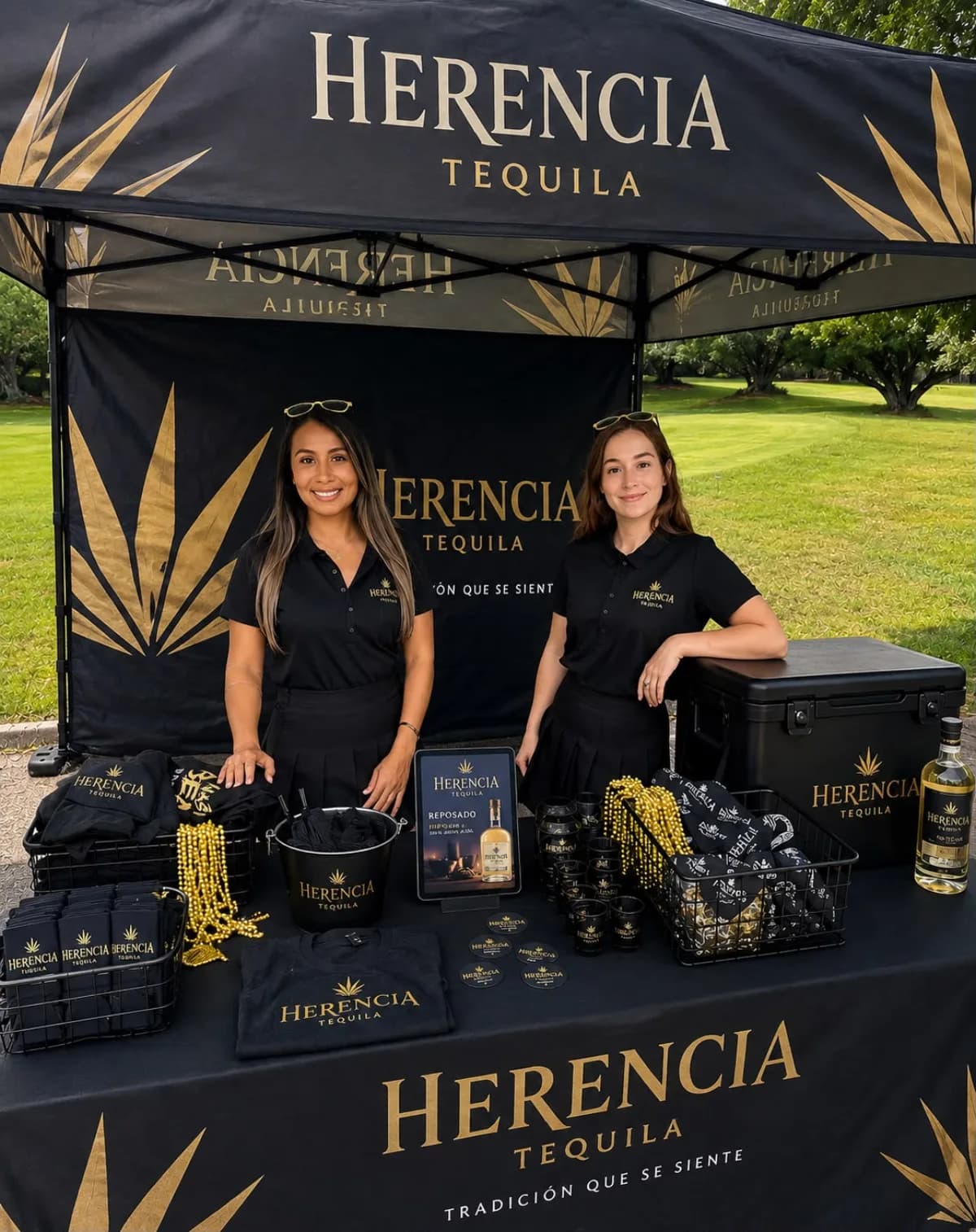
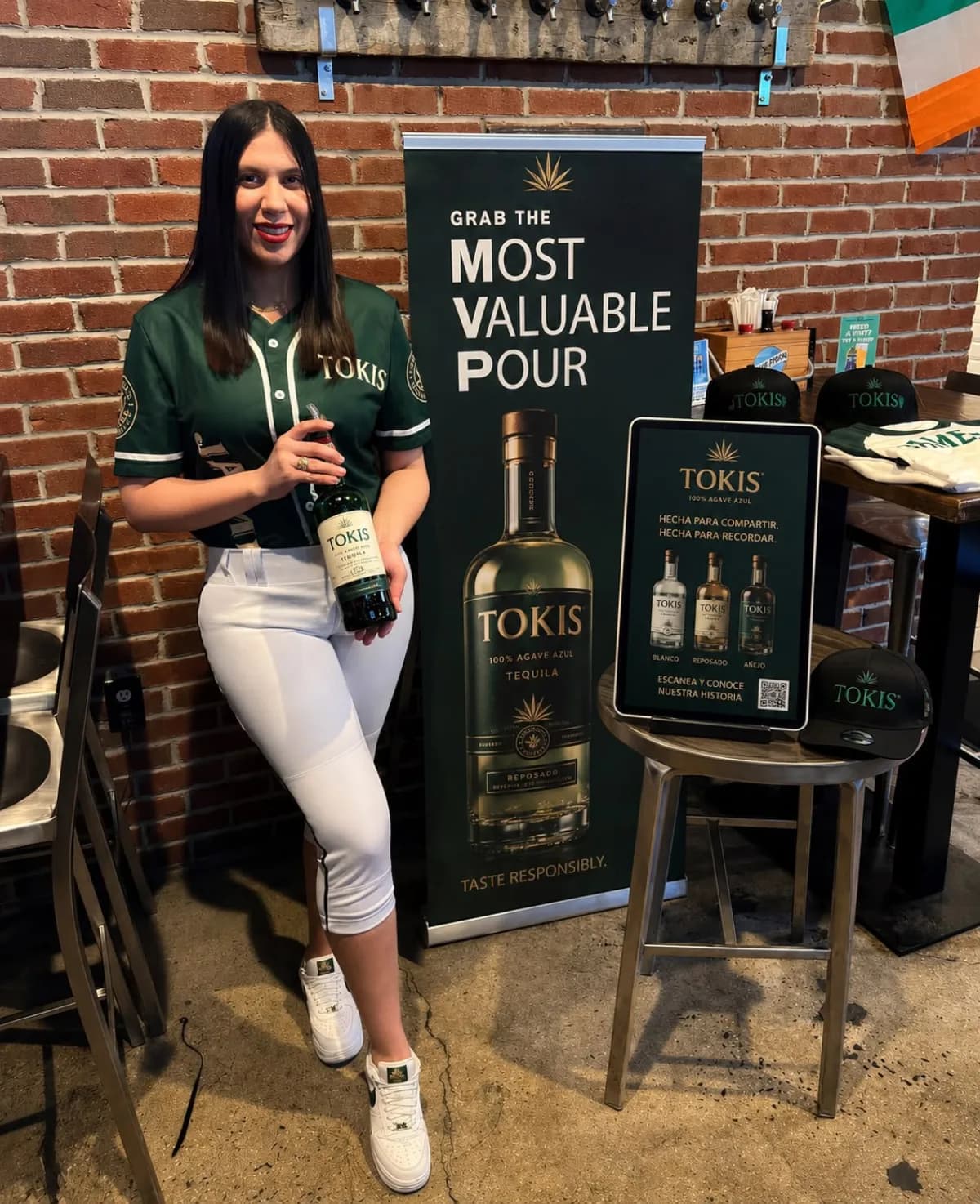
- Bilingual ambassadors — promotoras — who live the culture they speak to
- Activations built around real occasions: fútbol, regional music, family celebrations
- Code-switching that happens naturally, because the team does it at home
- Community credibility that compounds, the way Modelo's did
Every year a new cohort reaches legal drinking age. The brands that show up credibly in the community today are the ones each new 21+ cohort already recognizes. We treat the number as a pipeline — and every activation samples only verified 21+ adults.
This is the entire reason Impulso staffs every activation with bilingual ambassadors from the community itself. In-culture isn't a campaign flavor — it's the operating model.
Your move
What this means for your strategy
The thesis only pays if it reaches the shelf, the bar and the festival lawn. Here is how to convert it into execution.
Meet the consumer where the category is decided
Spirits adoption happens at trial: over 90% of new-spirits adoption starts with an introduction — a taste (The Kat Agency). Pick the channels that match your brand's stage and price point.
Explore all four servicesDemand proof, not vibes
Every shift should come back as data: GPS-verified check-ins, timestamped photos, samples poured, bottles sold, leads captured. If your agency can't show it, it didn't happen.
See the platformStudy the playbook
Before you book a single shift, read how sampling actually moves liquor off shelves — and where most programs leak money.
Read the liquor sampling guideFour ways to activate in-culture
Next step
The data is public. The advantage is execution.
Tell us your brand, your markets and your goal. We'll come back with a channel mix, a bilingual staffing plan, and the verified recap you'll get after every shift.
FAQ
Frequently asked questions
Is the U.S. Hispanic market monolithic?
No — and treating it that way is the most common mistake in the category. U.S. Hispanics trace their roots to more than 20 countries of origin, with deep differences by generation, language dominance and region: a Mexican-American audience in Texas reads an activation very differently than Caribbean communities in New York or Central American communities in California. That's why we staff each market with ambassadors from the community it serves, not a generic Spanish-speaking roster.
Which spirits over-index with Hispanic consumers?
Tequila leads the list: 27% of Hispanic adults drink it, the highest share of any ethnic group (Mintel, ~2012), and it still over-indexes with Hispanic drinkers in current demand data (NielsenIQ, 2026). Imported beer also outperforms — 34% versus 28% for the general market (Mintel, ~2012) — and 85% of Hispanic consumers prefer Mexican beer versus 70% overall (Technomic, 2013). Mezcal is riding the same premiumization wave (DISCUS, 2024).
Should we market in Spanish or in English?
Both, fluidly. Much of this market is bilingual or English-dominant, and code-switching is everyday behavior — so the real question isn't language, it's cultural fluency. A bilingual ambassador who reads the room and switches naturally will outperform a perfectly translated script every time. Translation is a commodity; in-culture is a strategy.
Where are the biggest Hispanic markets in the U.S.?
California (15.7M Hispanic residents), Texas (12.1M), Florida (6.2M) and New York (3.9M) lead by population (U.S. Census Bureau, 2024), with Illinois and Arizona among the other key states. Impulso focuses on exactly that footprint: CA, TX, FL, IL, AZ, NY.
Is tequila growth slowing?
Volume is maturing after a decade-long run, but value keeps climbing: U.S. tequila and mezcal reached $6.7B in 2024, up 2.9% (DISCUS, 2024), with premiumization driving the gains — and North America still accounts for roughly 62% of the global tequila market (Fortune Business Insights, 2025). The land-grab phase is ending; the execution phase, where trial and loyalty decide winners, is just starting.
How do I measure Hispanic-market lift?
Tie every activation to data: units sold during the tasting window versus baseline, samples poured, consumer interactions, leads captured and account reorders. Every Impulso activation closes with a verified recap — GPS check-ins, timestamped photos and post-event sales data — so lift shows up as a report, not an anecdote.